
You don’t need 14 days of clothes for a two-week Thailand backpacking trip.
Laundry is cheap and everywhere, so the goal is a small, flexible wardrobe and a light pack.
This guide shows exactly what to pack, the right bag sizes (35 to 40 L main, 18 to 22 L daypack), clothing counts, rain and temple must-haves, travel docs, and what to buy after you land.
Pack for comfort and quick washes, not for every possible outfit.
Read on to cut weight, avoid gate repacking, and still be ready for beaches, cities, and temples.
Thailand Backpacking Essentials At A Glance
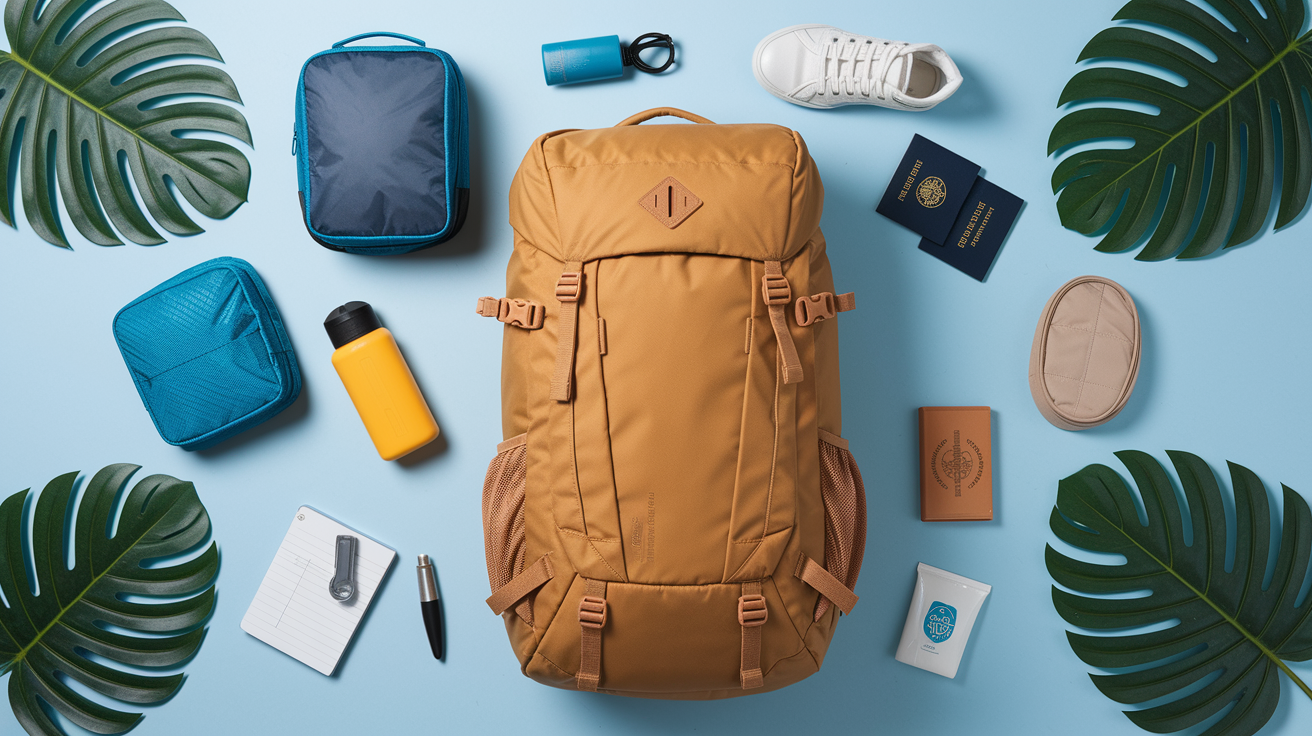
For a two week Thailand trip, you really only need two bags: a 35 to 40 liter main backpack and an 18 to 22 liter daypack. That’s it. Laundry is cheap and everywhere, so you’re not packing 14 days of outfits. You’re packing about 5 to 7 days worth and washing on a rhythm.
Aim for a total packed weight of roughly 7 to 10 kg. That said, don’t assume every 35 to 40 liter backpack counts as carry on. Budget airlines in Thailand (and the ones flying you here) often enforce a strict 7 kg cabin limit, so check your airline’s exact size and weight rules before you pack, not after you’re standing at the gate repacking in front of a line of annoyed passengers.
Here’s the full checklist, organized so you can scan it in under a minute.
Clothing
- 4 to 5 quick dry tops
- 2 to 3 shorts (one athletic, one nicer)
- 1 pair lightweight trousers or joggers (temple ready coverage for knees)
- 1 flowy midi skirt or breezy pants (also temple ready)
- 1 to 2 knee length or longer dresses, optional (temple ready)
- 7 to 8 underwear, 3 to 4 socks
- 1 to 2 swimsuits
- 1 sun shirt or light long sleeve top
- 1 sarong or scarf (temple coverage and beach towel substitute)
Footwear
- Sandals with a heel strap for boats and wet tiles
- Lightweight sneakers for long walking days
- Cheap flip flops for beaches and showers
Rainy Season Items
- 1 ultra light rain jacket or poncho
- Quick drying shoes with reliable traction (avoid anything heavily padded or slow to dry)
- A 5 to 10 liter dry bag for boats and sudden downpours
Gear
- 35 to 40 L main pack, 18 to 22 L daypack
- Microfiber towel
- 2 to 3 compression cubes
Documents
- Passport plus digital copies stored separately
- Travel insurance screenshot or printout
- Driver’s license and International Driving Permit, if you’ll rent a scooter
- Proof of onward travel
Electronics
- Universal adapter
- 30 W USB-C charger
- Power bank, 10,000 to 20,000 mAh
Health and Toiletries
- High SPF sunscreen and insect repellent
- Oral rehydration salts and basic first aid supplies
- Prescription medicine in original packaging
- A compact toiletry kit (travel size toothbrush, toothpaste, deodorant) rather than full size bottles you’ll just be hauling around
Bring Versus Buy
- Bring prescription medicine, high SPF sunscreen, your universal adapter, and any specialist or technical gear you genuinely depend on. Everything else (cheap toiletries, flip flops, laundry service, replacement tees) is easy and often cheaper to buy once you land.
This is your baseline. How you adjust it depends on your actual itinerary. More beach days mean more swimwear and less worry about coverage. More temples mean you lean harder on that sarong and those trousers. Trekking in the north shifts your footwear and rain strategy entirely. Keep reading, we’ll walk through each piece.
Clothing Recommendations For Your Fortnight In Thailand
(((alt-img2)))
Lightweight synthetic performance fabrics and fine merino wool generally beat heavy cotton and denim in Thailand’s heat and humidity, and it’s not close. They wick sweat, dry fast after a wash or a downpour, and resist holding onto odor the way cotton does after day three in 90 percent humidity. Cotton still feels nice when it’s dry and fresh out of the dryer, sure, but that window closes fast here. Once it’s damp from sweat or a sink wash, it stays damp. Nobody wants to pack a clingy, slightly musty shirt into their bag the next morning.
A small wardrobe works because it remixes well. The same breathable top that worked for a street food crawl can pair with shorts for casual sightseeing, with lightweight trousers for a temple visit, with your athletic shorts for a longtail boat ride, or with your one nicer bottom for a rooftop bar in Bangkok. Think of your clothes less like a daily outfit list and more like a small set of building blocks you rearrange depending on what the day calls for.
Laundry is what makes this whole system work. Plan to wash a small load roughly every 3 to 4 days, either through your guesthouse or a street laundry service nearby. Both are common and inexpensive across Thailand. Rotate what you wear so everything gets a chance to actually dry out between uses. And here’s a small but important habit: never pack damp clothing or swimwear into a sealed cube. Use your dry bag as a temporary holding spot until you can hang things out properly, otherwise you’ll open your bag two days later to a smell you can’t unpack fast enough.
Layering matters more than people expect, mostly because of air conditioning. Thai buses, trains, and malls run their AC cold, like genuinely cold, and northern evenings or higher elevation stops can catch you off guard too. A breathable long sleeve paired with a packable light jacket handles most of this. You don’t need a heavy sweater. You need something compact that takes the edge off a freezing overnight bus or a chilly motorbike ride through the mountains near Pai or Chiang Mai.
Temple coverage deserves its own mention because it trips up a lot of first time visitors. Shoulders and knees need to be covered at most major temples, and lightweight trousers or knee length clothing make this simple without extra effort. A sarong is a great backup for borderline situations, but it shouldn’t be your only plan. Some sites, including the Grand Palace, enforce dress codes strictly and will turn you away at the door if you show up in a tank top and ripped shorts, sarong or not.
Your itinerary should shape the final mix. Be
Final Words
Pack light: a 35–40 L main and an 18–22 L daypack will usually do. Aim for 7–10 kg and double-check your airline’s size and weight rules.
Follow the checklist—quick-dry tops, temple-ready trousers or a sarong, sandals plus sneakers, a light rain jacket, adapter, and prescription meds. Buy cheap toiletries and flip-flops locally and plan laundry every 3–4 days.
For what to pack for a two-week backpacking trip in thailand, prioritise irreplaceables, pick fast-drying fabrics, and adjust for season and activities. Do that and you’ll travel lighter, feel better, and enjoy more.
FAQ
Q: What is the 5-4-3-2-1 rule for packing?
A: The 5-4-3-2-1 rule for packing is a simple garment-count hack: 5 tops, 4 bottoms, 3 underwear/bras, 2 pairs of shoes, and 1 jacket—adjust for laundry, season, and planned activities.
Q: How much should I pack for 2 weeks in Thailand?
A: How much you should pack for 2 weeks in Thailand is a 35–40 L main pack plus an 18–22 L daypack, target 7–10 kg, with 4–5 quick-dry tops, 2–3 shorts, light trousers, sarong, and 7–8 underwear.
Q: Is $1000 enough spending money for 2 weeks in Thailand?
A: One thousand dollars for 2 weeks in Thailand is generally enough for budget to modest travel (about $70/day) excluding flights—covers hostels, street food, local transport; midrange hotels or many guided tours will raise costs.
Q: Is $3,000 enough for 3 weeks in Thailand?
A: Three thousand dollars for 3 weeks in Thailand is typically plenty for comfortable midrange travel (about $140/day), covering nicer hotels, domestic flights, and several tours; luxury choices or high-season travel will increase costs.