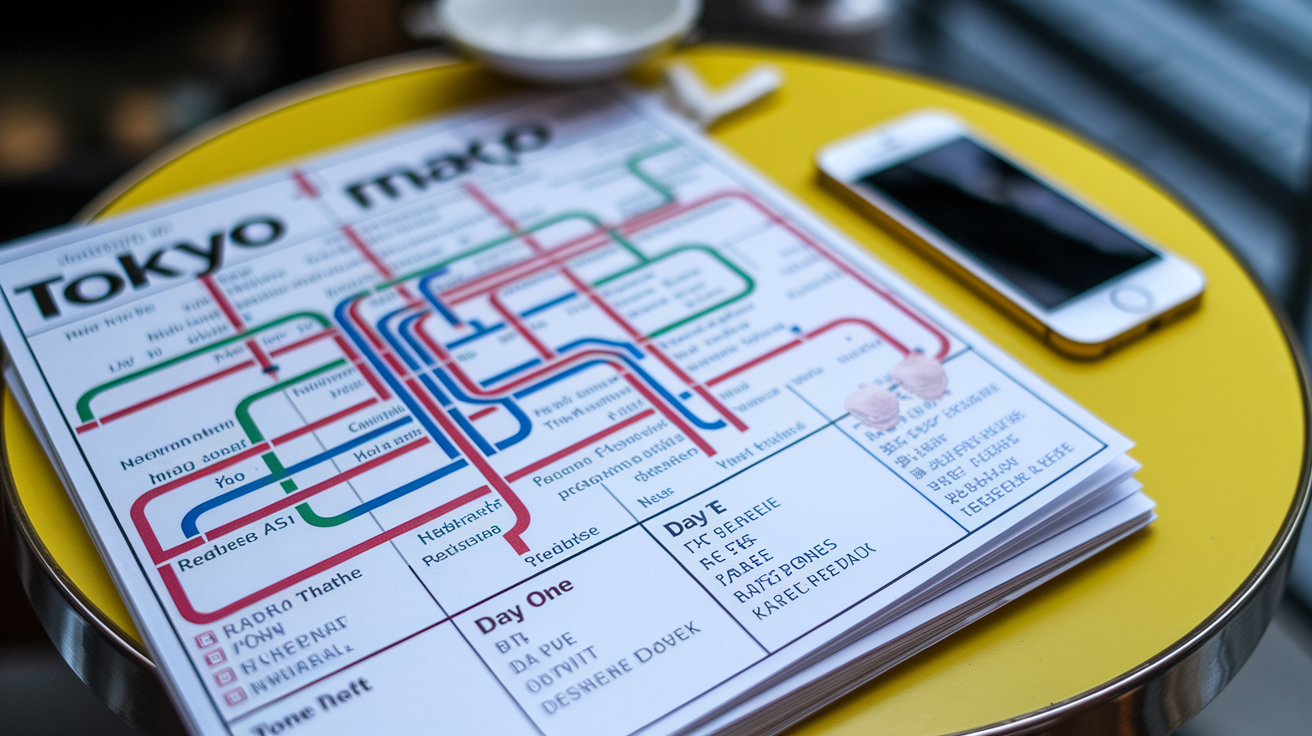

Think you can’t see Tokyo in 48 hours?
You can—if you split the city in half and stop treating the map like a straight line.
Eastern Tokyo (Tsukiji, Asakusa, Ueno, Ginza) makes day one compact; western Tokyo (Meiji Shrine, Harajuku, Shibuya, Roppongi) fills day two.
This route keeps transit short, cuts backtracking, and leaves room for real food and one skyline view.
Read on for a tight, realistic plan with time estimates, booking tips, and the few stops I’d skip when the clock runs out.
The Best Tokyo Route for Two Days at a Glance
The most efficient way to see Tokyo in two days is splitting the city in half. Eastern Tokyo on day one, western and central Tokyo on day two. This isn’t arbitrary. Tokyo’s historic core, with Tsukiji, Asakusa, Ueno, and Ginza, sits close together on the east side, while the trendier, more modern districts like Shinjuku, Harajuku, Shibuya, and Roppongi cluster to the west. Follow this pattern and you’re never crossing the entire city just to backtrack an hour later.
Two days is genuinely enough time to hit Tokyo’s biggest historic districts, its best known modern neighborhoods, a few standout food stops, and one proper skyline view. What it’s not enough for is a day trip outside the city, like Kamakura or Nikko. Save those for a longer visit. Treat every time block below as a flexible guide, not a strict countdown. Entrance queues are separate from the transit times listed and should be budgeted on top of them, especially on weekends. If you’re arriving later than planned, or traveling with kids who need slower mornings, cut one optional stop (Akihabara and Roppongi are the easiest to skip) rather than rushing through everything.
| Day and Time | Area | Core Experience | From/Mode/Travel Time |
|---|---|---|---|
| Day 1, 07:00–09:00 | Tsukiji | Breakfast at Tsukiji Outer Market | Starting point, no prior transfer |
| Day 1, 09:30–11:30 | Asakusa | Senso-ji Temple and surrounding stalls | From Tsukiji, subway, 15–20 min |
| Day 1, 12:00–14:00 | Ueno or Akihabara | Park, museums, or electronics district | From Asakusa, subway, 5–10 min |
| Day 1, 15:00–17:00 | Ginza | Upscale shopping and department store food halls | From Ueno/Akihabara, subway, 15–20 min |
| Day 1, 18:00–22:00 | Shinjuku | Dinner, izakaya, and nightlife | From Ginza, subway, 20–25 min |
| Day 2, 07:30–09:30 | Meiji Shrine | Forested shrine grounds, early calm | From Shinjuku hotel, subway, 10–15 min |
| Day 2, 09:30–12:00 | Harajuku | Takeshita-dori and Cat Street boutiques | From Meiji Shrine, on foot, 5–10 min |
| Day 2, 12:15–15:00 | Shibuya | Shibuya Crossing, Hachiko, lunch | From Harajuku, on foot or train, 2–15 min |
| Day 2, 15:30–18:30 | Roppongi / teamLab Borderless | Art museum or digital installation at Azabudai Hills | From Shibuya, subway, 15–20 min; add 30–60 min for weekend queue |
| Day 2, 19:00–22:00 | Tokyo Tower | Observation decks and dinner | From Roppongi, on foot or taxi, 15–20 min; weekend queue still leaves a feasible dinner window |
A route map should sit directly below this table, with day one marked in one color running east across Tsukiji, Asakusa, Ueno or Akihabara, Ginza, and Shinjuku, and day two marked in a second color running from Meiji Shrine through Harajuku, Shibuya, Roppongi, and Tokyo Tower.
Why Seeing Tokyo in 48 Hours Requires Careful Planning
(((alt-img2)))
Tokyo is bigger than it looks on a map. Two neighborhoods that seem like a quick hop can actually sit in completely different districts, separated by multiple train lines run by different operators. That matters because Tokyo’s rail network, while fast and spotless, isn’t one unified system. Moving between operators sometimes means exiting one station and walking to another, and that eats time that doesn’t show up if you’re just eyeballing distances.
This is exactly why grouping sights by geography, not by popularity, makes or breaks a short visit. A loosely sequenced list of “must see” landmarks sounds appealing, but bouncing from Shibuya to Asakusa back to Shinjuku in the same afternoon turns a 48 hour trip into a 48 hour commute. Each attraction might be worth visiting on its own. But the order you see them in determines whether you’re spending your time sightseeing or standing on a platform.
The east to west clustering in the schedule above is your main defense against this. It’s the single biggest lever for protecting your limited hours. The sections ahead cover the specific transit cards, booking windows, and etiquette details that make this plan work smoothly once you’re actually moving through the city.
Tokyo Day One: Markets, Temples,
(((alt-img3)))
Final Words
Start at Tsukiji for sushi, then head to Asakusa’s Senso‑ji, Ueno or Akihabara, Ginza, and finish night one in Shinjuku.
Day two moves west: Meiji Shrine, Harajuku, Shibuya, then Roppongi or teamLab, finishing at Tokyo Tower. The east-to-west cluster saves transit; add 30–60 minutes for weekend queues. If you arrive late or have kids, skip one optional stop.
This 48-hour Tokyo itinerary fits top historic spots, modern neighborhoods, food, and a skyline view into one strong weekend, but not a day trip outside the city. Enjoy it; you’ll leave satisfied and ready to plan a return.
FAQ
Q: Is 48 hours enough to see Tokyo?
A: Forty-eight hours is enough to see Tokyo’s leading historic districts, modern neighborhoods, food experiences, and one skyline viewpoint, but not enough for a day trip outside the city.
Q: What is the best route for two days in Tokyo?
A: The best route for two days in Tokyo clusters east-side sights on day one (Tsukiji, Asakusa, Ueno/Akihabara, Ginza) and western/central sights on day two (Meiji, Harajuku, Shibuya, Roppongi, Shinjuku).
Q: What are the must-see stops on a 48-hour Tokyo itinerary?
A: Must-see stops in a 48-hour Tokyo plan are Tsukiji Outer Market, Senso-ji in Asakusa, Ueno or Akihabara, Ginza shopping, Meiji Shrine, Harajuku, Shibuya Crossing, Roppongi/teamLab, and Tokyo Tower.
Q: How long does it take to travel between neighborhoods in this plan?
A: Typical transfers between major neighborhoods take 15–30 minutes; shorter hops like Asakusa to Ueno are 5–10 minutes, Shibuya to Harajuku 2–5 minutes. Budget 30–60 extra minutes for weekend queues.
Q: What should I book ahead and what can I decide later?
A: Book teamLab Borderless, popular observation decks, and busy restaurant reservations ahead; casual meals, market visits, and temples can usually be decided the same day unless it’s a weekend or holiday.
Q: How should I pace each day and what can I skip if short on time or with kids?
A: Pace days with one main activity per block and treat times as flexible; if arriving late or traveling with children, skip one optional stop such as teamLab or Roppongi nightlife to keep the day relaxed.
Q: How much does a sushi breakfast at Tsukiji cost and how long should I allow?
A: A sushi breakfast at Tsukiji costs about 1,500–4,000 JPY; allow 2–3 hours at the market for eating, browsing stalls, and short queues during busy mornings.
Q: Where should I base myself to follow this two-day route efficiently?
A: Base yourself centrally: Ginza for walkable food and shopping, Shinjuku for rail connections and nightlife, or Shibuya for a younger vibe. Any of these keeps both days’ routes short and efficient.
Q: Do walking times feel longer than they look on the map?
A: Walking between neighborhoods can feel longer than maps suggest; for example, Ginza to Tsukiji is 5–10 minutes on foot but crowds or cobbles can slow you, so add a walking buffer.
Q: Do I need a route map and how should I use it?
A: A route map with color-coded day-one and day-two lines helps avoid backtracking; save an offline map, screenshot the colored routes, or print the two tracks before you go.