
You don’t need a week in Paris to “do” Paris.
For most first-time visitors, 4 to 5 days hits the mark.
If you’re tight on time, 3 days is a practical minimum, but you’ll give up museum depth and any full day trips.
Four days lets you cover the Eiffel Tower, the Louvre, Notre-Dame, and Montmartre without racing across town.
Five days buys breathing room, like a Versailles day trip or a calm second museum day.
Pick based on how fast you move, your budget, and whether a day trip is on your list.
Best Paris Trip Length At A Glance
For most first-time visitors, 4 to 5 days in Paris hits the mark. If you’re tight on time, 3 days works as a practical minimum, but you’ll give up museum depth and any day trips to squeeze in the icons everyone wants to see.
Four days gives you enough runway to cover the Eiffel Tower, the Louvre, Notre-Dame, and Montmartre without racing between them. Five days adds breathing room, usually in the form of a Versailles day trip or a second pass through a museum you rushed the first time. Your final number really comes down to three things: how fast you like to move, what your budget allows, and whether a day trip outside the city is on your list. Book 3 to 5 hotel nights to match a 4 to 5 day visit, and you’ve got your benchmark.
Pros And Cons Of Different Trip Lengths In Paris
Every extra day in Paris buys you more flexibility, but it also means another hotel night and another day of meals and transit costs. Here’s how the main options stack up, so you can weigh time against budget before you book anything.
| Trip Length | Pros | Cons |
|---|---|---|
| 3 days | Covers the principal icons like the Eiffel Tower, Louvre, and Notre-Dame area | Requires tight attraction groupings, limited museum time, and no full-day excursion |
| 4 days | Covers the essential landmarks at a manageable pace | Still leaves little room for Versailles or extensive museum visits |
| 5 days | Adds Versailles, deeper museum exploration, or a slower pace | Requires another hotel night and a larger budget |
| 7+ days | Supports several excursions (Versailles, Giverny, Normandy, Champagne) and neighborhood immersion | Carries higher lodging and dining costs and may exceed the time needed by sight-focused visitors |
If you only remember one thing from this table, make it this: 4 to 5 days is the sweet spot for most first-time travelers. Long enough to see what you came for, short enough to keep costs reasonable, and flexible enough to add Versailles if you want it.
What A 3-Day Paris Trip Looks Like
This condensed plan works well for layovers, multi-city itineraries, or anyone working with a tighter schedule or budget.
-
Day 1: Group the Eiffel Tower with nearby sights and plan on 1.5 to 3 hours there, depending on which ticket you book and how long the lines run. Add an approximately 1-hour Seine cruise, then close the day with an evening walk through the same neighborhood so you’re not backtracking across town.
-
Day 2: Reserve 2 to 3 hours for the Louvre’s highlights, since seeing the entire museum in a day just isn’t realistic. From there, walk through the Tuileries Gardens toward the Champs-Élysées and finish at the Arc de Triomphe. A timed Louvre reservation isn’t optional here. Book before you land and skip the line-up risk.
-
Day 3: Spend the morning on Île de la Cité, taking in Sainte-Chapelle and the Notre-Dame area. In the afternoon, pick one: Montmartre for the hilltop views and winding streets, or Musée d’Orsay if art matters more to you than wandering. Three days means choosing, not doing both.
What A 4-Day Paris Itinerary Covers
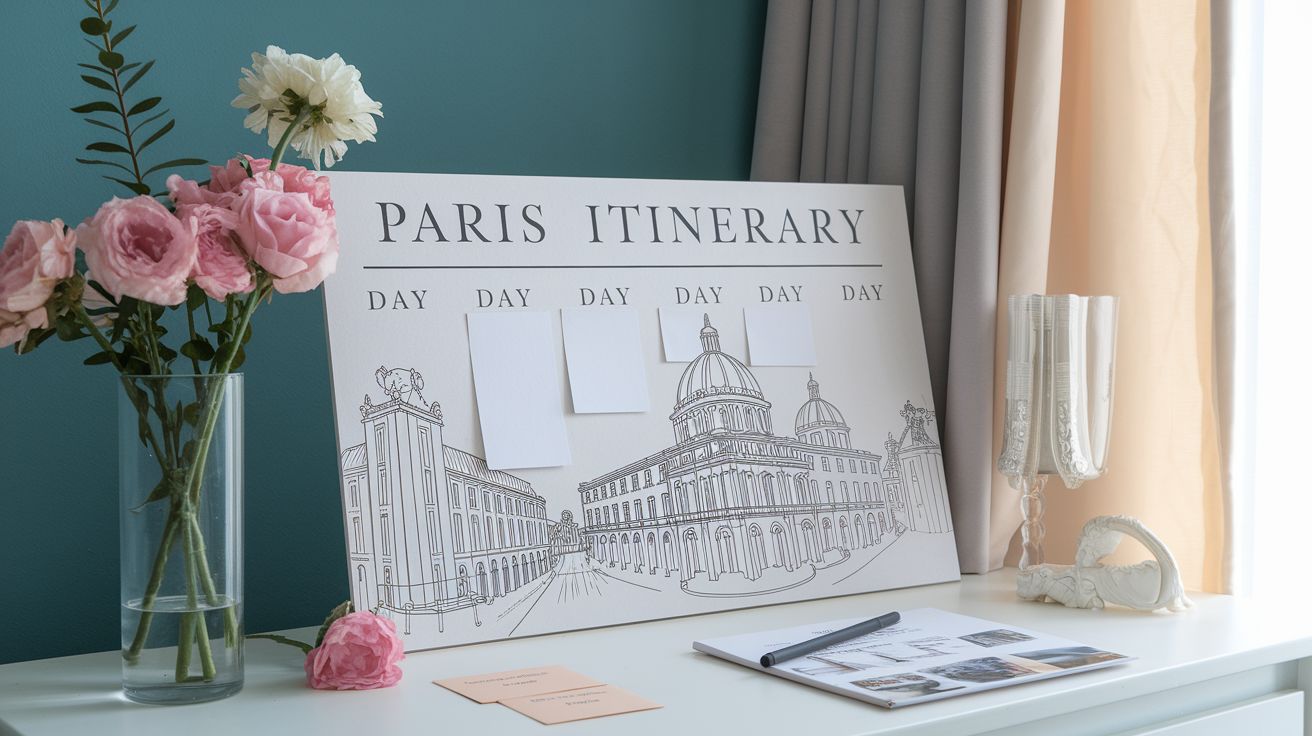
This itinerary suits first-time visitors who want to see the principal landmarks without compressing everything into three rushed days.
-
Day 1: Build in time for arrival and hotel check-in first. Then take a short walk around your neighborhood to get oriented, followed by an approximately 1-hour Seine cruise. In the evening, head to the Eiffel Tower with a reservation already booked, allowing 1.5 to 3 hours depending on how high you go. Stairs to the second floor run about €11, while an elevator ticket to the summit costs roughly €28 to €30.
-
Day 2: Reserve 2 to 4 hours for the Louvre in the morning, since the museum is genuinely massive and rewards unhurried time. Louvre admission runs about €17, and you’ll want to verify its weekly closure day before locking in your date. From there, follow a natural walking route through the Tuileries Gardens, up the Champs-Élysées, and finish with 1 to 2 hours at the Arc de Triomphe, including time on the observation deck if you’re up for the stairs.
-
Day 3: Group Île de la Cité, Sainte-Chapelle, the Notre-Dame area, the Latin Quarter, and Luxembourg Gardens into one day since they sit close together. Sainte-Chapelle takes 45 to 90 minutes to visit and costs about €10 to €12. Spend 2 to 4 hours wandering the Latin Quarter and gardens afterward, then cap the evening with an optional 1 to 2 hour rooftop view or a walk through Montparnasse.
-
Day 4: Spend the morning in Montmartre and at Sacré-Cœur, about 1 to 2 hours total. In the afternoon, head to Musée d’Orsay for roughly 2 hours, where tickets run about €15 to €17, or use the time for unstructured wandering in whichever neighborhood caught your eye earlier in the trip.
What A 5-Day Paris Trip Adds, Including Versailles
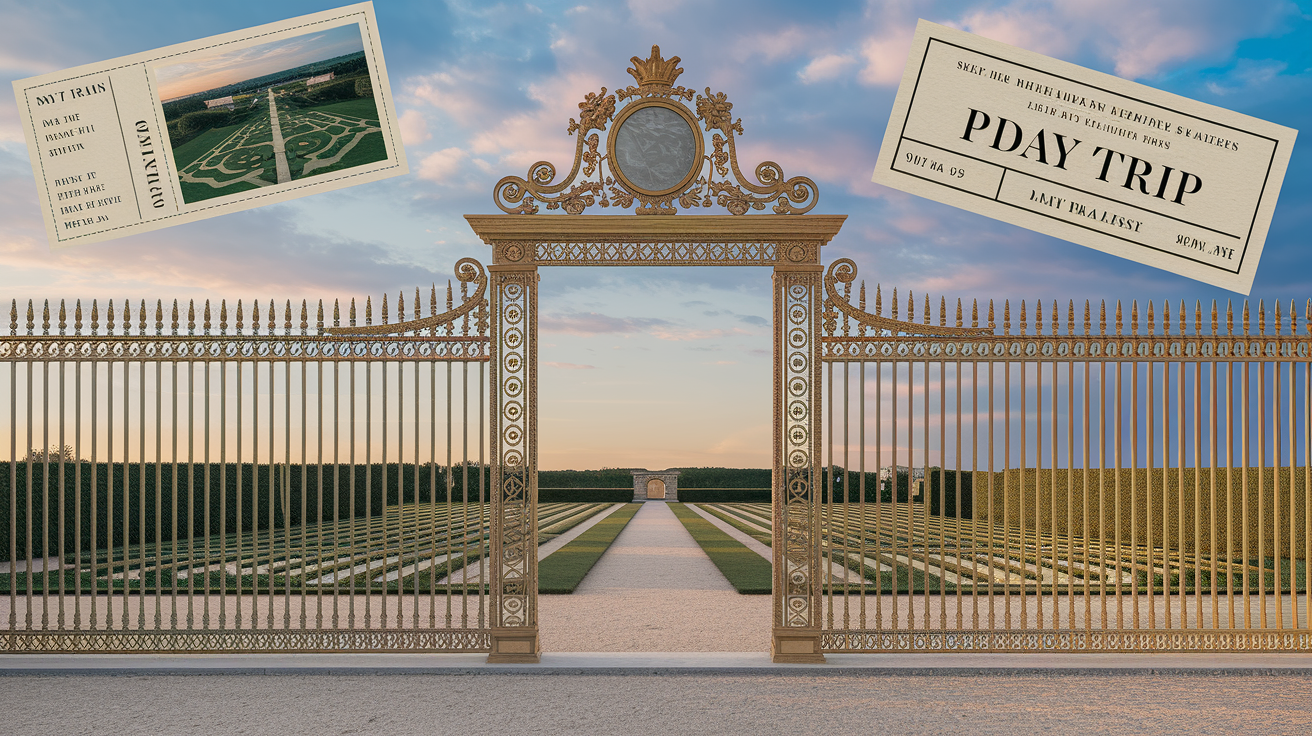
This option suits visitors who want to add Versailles to the trip or just want more breathing room for museums and neighborhoods they didn’t fully cover.
Follow the four-day itinerary above for Days 1 through 4. Day 5
Final Words
Four to five days is the practical sweet spot. Three days will get you the must-sees if you’re tight on time, but it’s rushed. The post lays out clear 3-, 4-, and 5-day plans, with daily pacing, ticket tips, and how to group sights so you don’t waste time on transit.
If you’re asking how many days in paris for first-time visitors, aim for 4 days for the essentials and 5 if you want Versailles or extra museum time. Book key tickets, keep a relaxed pace, and enjoy the city.
FAQ
Q: How many tourists go to Paris in a year?
A: The number of tourists who visit Paris each year is roughly 30–40 million (pre-pandemic estimate). Annual totals change with global trends, special events, and low pandemic years.
Q: What is the best way to get around Paris?
A: The best way to get around Paris is the metro for speed and coverage, supplemented by walking for nearby sights and buses or ride-hailing for late-night or direct trips.
Q: What’s the best month to go to Paris?
A: The best month to go to Paris is May or September for mild weather and fewer crowds than summer, with open attractions; April and October are close second choices.
Q: How much do I need for Paris for 3 days?
A: The money you need for Paris for 3 days is about €200–€600 per person (excluding flights): roughly €60–€100/day budget, €150–€250/day midrange, more for luxury or day trips.